Ayurvedic Cancer Treatment in India: Complete Guide
About the Author
Dr. Hemant Kadam, BAMS, Health Reactive India, has 10 years of experience in Ayurveda and homeopathic medicine.
Medically reviewed by Dr. Farah Zariwala, BHMS, Health Reactive India — 10 years' experience in Ayurveda and homeopathic medicine. Last reviewed: 19 August 2026.
Important: This article is for general informational purposes only and does not constitute medical advice. Body Revival is intended as a complementary, supportive formulation and is not a treatment, cure, or substitute for conventional cancer therapy. Always consult a qualified oncologist and Ayurvedic physician before beginning any supportive regimen.
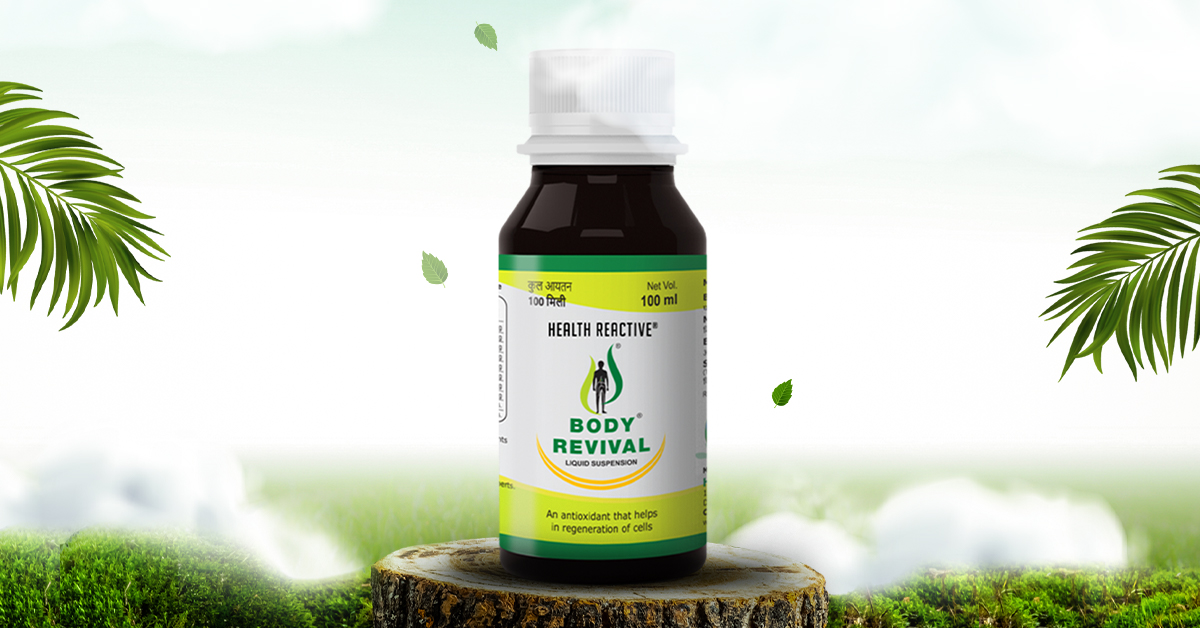
Ayurvedic cancer treatment in India today means supportive, adjuvant care — herbal formulations, detoxification protocols, and lifestyle guidance used alongside conventional oncology, not instead of it. It is not a standalone cure. Body Revival, developed by Health Reactive, is the first Ayurvedic supportive-care formulation registered in India's Clinical Trials Registry (CTRI/2023/11/059465), evaluated in a 12-week study of 44 women recovering from breast cancer surgery.
Cancer is one of the most difficult diagnoses to accept. The physical consequences of conventional treatments—chemotherapy, radiotherapy, surgery—are well known. What is less discussed, especially in conventional medicine, is what happens in the body between treatments: fatigue, cellular damage, the progressive weakening of the immune system, and the desperate search for a treatment capable of supporting the body's self-healing abilities.
This is precisely where Ayurvedic medicine comes in, practiced in India for over 5,000 years, it has always played an essential role there. Not as a substitute for oncology, but as a powerful complement: a system that supports the body's self-healing ability, eliminates accumulated toxins, and strengthens cells.
Based on our research, this guide explains what Ayurvedic cancer treatment in India entails, which herbs have proven most effective, what criteria to consider when choosing an Ayurvedic preparation, and how Health Reactive's Body Revival program fits into a holistic healing process.
Body Revival's Clinical Trial — At a Glance
- Registry: CTRI/2023/11/059465
- Study site: J.B. Roy State Ayurvedic Medical College and Hospital, Kolkata
- Participants: 44 women recovering from breast cancer surgery
- Duration: 12 weeks
- Design: Open-label, comparing Body Revival alongside standard care to standard care alone
- Status: Registered and completed; not yet published in a peer-reviewed journal
1. How Ayurveda Approaches Cancer
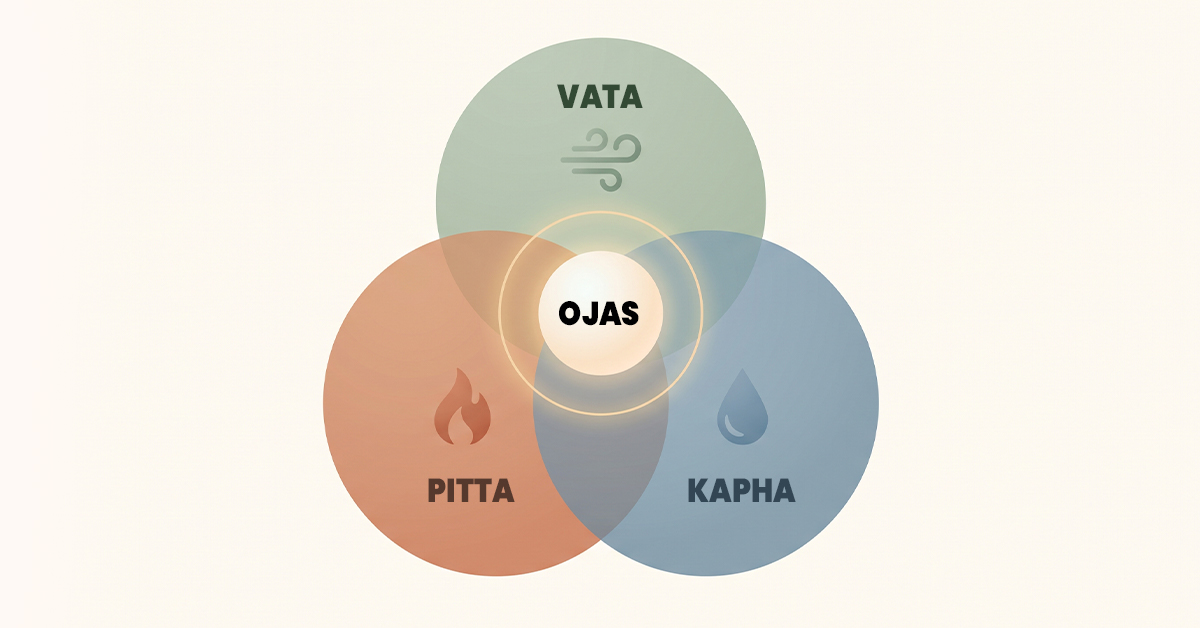
The ayurveda doesn’t use 'cancer' word in the way allopathic medicine does. Texts describe Arbuda (benign tumors) and Granthi (cysts or malignant growths) as conditions arising from deep imbalances across the three dosha — Vata, Pitta, and Kapha — combined with the accumulation of Ama (metabolic toxins) and a weakening of Ojas (vital immunity).
This perspective has a practical implication: Ayurvedic treatment addresses the entire body-mind system, not just the tumor itself. The goal is to:
- To restore the doshic balance disrupted by disease, illness, stress, or conventional treatments
- Eliminate Ama — toxic accumulations at the cellular level — through detoxification protocols
- This can strengthen 'Ojas' (innate immunity), thereby enabling the body to prevent further cellular damage or avoid the loss of its ability to function properly over time.
- Protect and regenerate healthy tissues damaged by chemotherapy, radiation, or environmental toxins
- Supporting the functioning of the body's organs—particularly the liver, kidneys, and lungs—which bear the primary responsibility for eliminating toxic substances during conventional cancer treatments.
This represents a holistic approach to treatment, and for precisely this reason, the attention of integrative cancer specialists worldwide is consistently being drawn toward Ayurveda.
2. Key Ayurvedic Herbs Used in Cancer Care
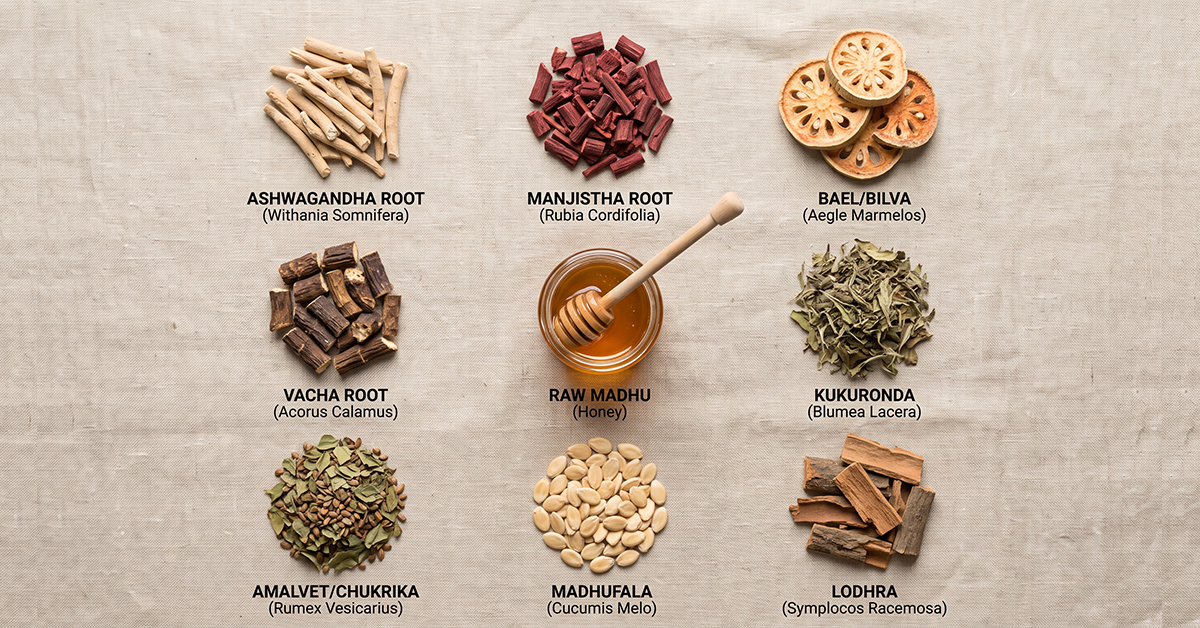
Many medicinal plants used in traditional Ayurvedic medicine have become the subject of modern pharmacological research. We have provided below a list of plants that have been clinically studied—a list that includes many of the plants found in Health Reactive's Body Revival.
Ashwagandha (Withania Somnifera)
In my opinion, Ashwagandha is the most extensively researched Ayurvedic medicinal herb globally. It is an adaptogen that lowers cortisol levels, strengthens the immune system, and has been found to possess anti-cancer properties in numerous *in vitro* studies. This herb holds particular significance in cancer treatment, where it is utilized to alleviate treatment-induced fatigue and to help maintain white blood cell counts during chemotherapy.
Manjistha (Rubia Cordifolia)
A potent blood-purifying herb, Manjistha has been proven to possess antioxidant and anti-inflammatory properties. It aids in lymphatic drainage and has been studied for its cytotoxic effects on specific cancer cells. It is a key herb in Ayurvedic detoxification protocols.
Bilva (Aegle Marmelos)
The Bael tree is abundant in numerous bioactive compounds, including alkaloids and flavonoids. Research has focused on its role in mitigating oxidative stress and aiding the liver's detoxification processes, making it particularly beneficial for patients undergoing treatment regimens involving a heavy intake of medications.
Vach (Acorus Calamus)
Beta-asarone—a constituent of 'Vacha' known for its neuroprotective and anti-inflammatory properties—has been studied and has demonstrated efficacy against specific cancer cells. It also promotes mental clarity—a significant benefit in addressing the issue of 'Chemo Brain' (the cognitive impairment caused by chemotherapy) experienced by many patients.
Lodhra (Symplocos Racemosa)
Lodhra is a lesser-known yet highly effective medicinal herb. It maintains hormonal balance in the body and helps inhibit the growth of cancer cells. Consequently, it proves particularly beneficial for hormone-related cancers. Furthermore, it also serves to protect the liver.
Kukuronda (Blumea Lacera)
In traditional medicine, it is utilized for its anti-inflammatory and antimicrobial properties. In Ayurvedic cancer therapy, its primary role is to improve respiratory health and reduce inflammation within the body.
Madhu (Honey)
Beyond merely serving as a sweetening agent, honey functions as an Anupan (carrier medium) in Ayurvedic medicine formulation, thereby enhancing the bioavailability of active constituents within medicinal herbs and facilitating their deep penetration into the tissues. Certain varieties of raw honey have also been found to possess antioxidant properties.
3. Ayurveda as an Adjuvant in Cancer Treatment
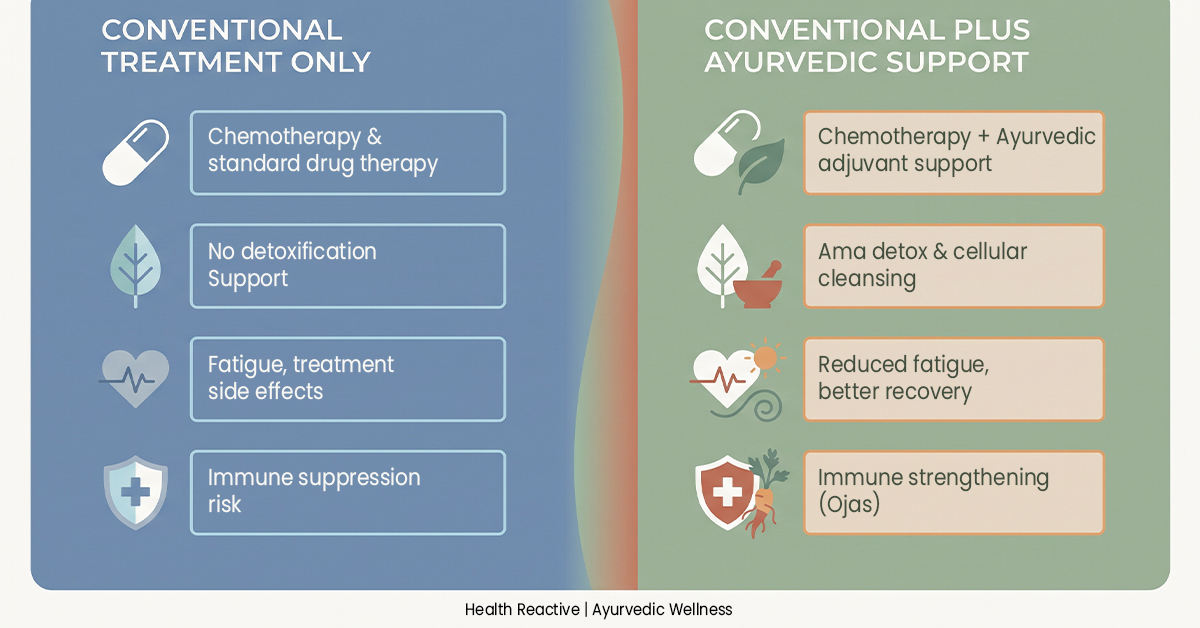
The most important nuance in any honest conversation about Ayurvedic cancer care is this: Ayurveda's primary role in modern oncology is as an adjuvant — a complementary support system—not as a standalone cancer cure.
An adjuvant therapy is one that enhances the effectiveness of primary treatment. In this context:
- Ayurvedic formulations can reduce the side effects of chemotherapy—such as nausea, fatigue, and a decline in immunity
- Detoxification protocols help the body eliminate drug metabolites more efficiently
- Adaptogenic herbs help maintain the resilience of the adrenal and nervous systems during periods of stress experienced during treatment
- Cellular regeneration support helps rebuild healthy tissue destroyed by radiation
- Diet and lifestyle guidance in Ayurveda reduces inflammatory burden during recovery
India's Ministry of AYUSH has progressively incorporated Ayurvedic cancer treatments into national health programs. Many cancer centers affiliated with AYUSH are now offering integrated treatment modalities that combine conventional and Ayurvedic therapies under medical supervision.
4. Which Cancer Types Does the Evidence Apply To?
It's worth being precise here, because the two things Body Revival offers are different in scope.
The CTRI-registered clinical trial evaluated Body Revival specifically in women recovering from breast cancer surgery, over a 12-week period, alongside standard chemotherapy or radiotherapy care. That trial's findings — improved quality of life, appetite, and physical stamina, and fewer treatment-related side effects — describe that specific patient group and study conditions. They are not evidence that Body Revival produces the same effects in other cancer types.
Separately, Body Revival is formulated and indicated more broadly as an adjuvant, recuperative formulation for the kind of stress-induced wear-and-tear, drug-induced toxicity, and fatigue that commonly accompanies cancer treatment generally — regardless of cancer type. This broader indication is based on the formulation's traditional Ayurvedic use and its constituent herbs' individual pharmacological research (see Section 10), not on the CTRI trial itself.
In practical terms: if you're recovering from breast cancer surgery, the clinical trial data speaks directly to your situation. If you're managing a different cancer type, Body Revival may still be appropriate as general supportive care, but that use isn't backed by the same trial-specific evidence — talk to your oncologist and an Ayurvedic physician about whether it fits your specific treatment plan.
5. Body Revival by Health Reactive — Cellular Support for Cancer Recovery
Cancer is one of the most difficult diagnoses to accept. The physical consequences of conventional treatments—chemotherapy, radiotherapy, surgery—are well known. What is less discussed is what happens in the body between treatments: fatigue, cellular damage, and the progressive weakening of the immune system.
This guide is written by the team behind Body Revival, an Ayurvedic supportive-care formulation and the first of its kind registered with India's Clinical Trials Registry (CTRI/2023/11/059465), manufactured under ISO and GMP certification. We explain what Ayurvedic cancer support actually means, which herbs have the most research behind them, what to look for in an Ayurvedic preparation, and how Body Revival fits into a supportive-care plan alongside conventional oncology — never in place of it.
About the Clinical Trial
Body Revival's supportive-care effects were evaluated in a CTRI-registered trial (CTRI/2023/11/059465) conducted at J.B. Roy State Ayurvedic Medical College and Hospital, Kolkata. The 12-week study followed 44 women recovering from breast cancer surgery who had recently completed or were undergoing chemotherapy or radiotherapy, comparing Body Revival alongside standard care to standard care alone.
According to the trial's registered summary, patients taking Body Revival reported better overall quality of life — including physical and psychological well-being — along with improved appetite and physical stamina, and fewer chemotherapy- and radiotherapy-related effects such as nausea, constipation, muscle weakness, and exhaustion.
This was a single-site, open-label study with a modest sample size, and its results are registered with CTRI but have not yet been published in a peer-reviewed journal. As with any single trial, these findings describe the study population and conditions tested — they're not a guarantee of results for any individual. Body Revival is intended as supportive care alongside your oncologist's treatment plan, not a replacement for it.
What Makes Body Revival Different?
- Liquid suspension format: Liquid herbal medicine integrates into and is absorbed by the body more rapidly than pills or capsules. Consequently, its beneficial components can reach the specific parts of the body where they are needed more effectively.
- Targets abnormal cells: This medication helps the body identify and eliminate damaged or malfunctioning cells. It also aids in the generation of new and healthy cells.
- Multi-organ support: Body Revival simultaneously supports the liver, kidneys, lungs, heart, and brain — all of which come under stress during cancer treatment.
- Detoxification: It helps remove Ama — accumulated metabolic waste and drug residues — supporting the body's natural cleansing processes.
- ISO & GMP-certified manufacturing: Produced in certified facilities in Himachal Pradesh, ensuring consistent efficacy and adherence to safety standards.
Indication for Cancer Support Patients
Body Revival is suggested as an adjuvant, recuperative, and rejuvenating formulation in stress-induced wear-and-tear syndrome, drug-induced toxicity, wasting illnesses, and premature ageing – circumstances that closely mimic the physical reality of cancer therapy. It is particularly well-suited to:
- Patients undergoing or recovering from chemotherapy or radiation
- Individuals seeking to detoxify after prolonged medication use
- Those managing fatigue, weight loss, or immune suppression associated with cancer
- Patients looking to support overall organ health during or after treatment
Usage Guidelines
|
Aspect |
Guidance |
|
Method |
Oral liquid dose taken at night before sleeping, or as directed by practitioner |
|
Frequency |
Recommended on alternate days to accommodate the body's healing response to the formulation's high potency |
|
Diet Restriction |
Avoid very sour foods (lime, vinegar, raw mango, pickles). Dairy products including milk, curd, and milk-based foods must be completely avoided during the course |
|
Side Effects |
None reported — this is a time-tested, safe Ayurvedic product |
|
Shelf Life |
Approximately 3 years. Always cap the bottle tightly after use. Expiry date marked on each lot |
6. Diet and Lifestyle During Ayurvedic Cancer Treatment
Ayurveda posits that 'diet' itself is medicine. The food you consume during the course of treatment either supports the body's healing process or creates an obstruction within it. The recommendation consistently offered through both ancient wisdom and clinical guidance is as follows:
Foods to Include
- Warm, freshly cooked meals — easy to digest, which reduces the digestive burden on an already stressed system
- Moong dal, khichdi, soups — gentle on the gut and nourishing at a cellular level
- Seasonal vegetables lightly cooked with digestive spices such as cumin, turmeric, and ginger
- Pomegranate, papaya, and cooked apples — fruit choices that are sweet, not sour
- Tulsi tea, ginger-cumin water, and warm water throughout the day for gentle detoxification
- Ghee in moderate amounts — a carrier medium that enhances absorption of fat-soluble nutrients
Foods to Avoid
- Dairy in all forms — milk, curd, paneer, butter, cheese — particularly when taking Body Revival, as dairy interferes with assimilation
- Very sour foods — lime, lemon juice, tamarind, raw mango, vinegar, pickles
- Processed and packaged foods high in preservatives and artificial additives
- Red meat and heavy non-vegetarian foods that increase the inflammatory load
- Alcohol and tobacco — which create toxic burdens and interfere with cellular regeneration
- Ice-cold beverages — which suppress digestive fire (Agni)
Lifestyle Practices That Complement Treatment
- Pranayama (breathing exercises) — especially Anulom Vilom and Bhramari — to support oxygenation and reduce stress
- Gentle Yoga asanas suited to energy levels, supporting lymphatic movement and circulation
- Adequate sleep — the body performs its deepest regeneration during sleep, especially between 10 PM and 2 AM
- Sunlight exposure in the early morning for Vitamin D synthesis and circadian rhythm regulation
- Stress reduction through meditation — chronic stress is documented to suppress immune function
7. Best Ayurvedic Cancer Hospitals and Treatment Centers in India
For those seeking structured Ayurvedic cancer care under qualified supervision, India has a growing number of institutions offering integrative oncology programmes:
Government and Institutional Centers
- AIIMS Integrative Medicine Department — New Delhi: Offers Ayurvedic consultations alongside oncology
- National Institute of Ayurveda (NIA) — Jaipur: Government-funded institute with cancer support protocols
- Institute of Medical Sciences, BHU — Varanasi: One of India's oldest integrative medicine institutions
- Kerala Ayurveda Hospitals — Kerala: Known for Panchakarma detoxification for cancer patients
What to Look for in an Ayurvedic Cancer Treatment Center
- Qualified Ayurvedic physicians (BAMS or MD Ayurveda) with specific oncology experience
- Integration with conventional oncology — a centre that coordinates with your allopathic team is safer and more effective
- ISO or GMP-certified medicine sourcing — ensures product quality and safety
- Personalised treatment plans — a good centre will not offer the same protocol to every patient
- Transparent communication about what Ayurveda can and cannot do in your specific case
Understanding the Cancer Diagnosis Pathway
For readers newer to this process: a cancer diagnosis typically follows a few standard steps. Initial imaging — ultrasound, CT, MRI, or PET scan depending on the suspected site — identifies areas of concern. A biopsy then confirms whether cells are malignant at a cellular level. If cancer is confirmed, staging investigations determine how far the disease has spread, which shapes the treatment plan your oncologist recommends.
Ayurvedic supportive care, including formulations like Body Revival, generally enters the picture after this diagnostic and treatment-planning stage — as a complement to whatever conventional treatment your oncologist has prescribed, not as part of the diagnostic process itself.
8. Understanding Cell Theory and Immunotherapy in Ayurveda
Body Revival's mechanism is grounded in three modern scientific concepts that have clear parallels in classical Ayurvedic thought:
Cell Theory
The body is composed of cells, and disease begins when cells become damaged, abnormal, or dysfunctional. Body Revival's herbal actives support the identification and removal of compromised cells while stimulating the growth of healthy replacements. This mirrors the Ayurvedic concept of Dhatu (tissue) regeneration through Rasayana (rejuvenation) therapy.
Natural Immunotherapy
The immune system is the body's primary defence against cancer. Herbs like Ashwagandha, Manjistha, and Madhu in Body Revival act as natural immune modulators — they do not artificially suppress or over-stimulate, but rather help restore the immune system's innate intelligence and responsiveness.
Cellular Regeneration
Alongside clearing damaged cells, Body Revival supports the body's capacity to regenerate new, healthy cellular tissue. This is particularly valuable in post-treatment recovery, where the rebuilding of bone marrow, gut lining, and organ tissue is critical to restoring full function.
9. Frequently Asked Questions
Find answers to the most common questions about Ayurveda, Body Revival, and cancer support.
Ayurveda does not claim to be a standalone cure for cancer. Its well-documented role is as a powerful adjuvant—supporting the body through treatment, reducing side effects, enhancing immunity, and promoting cellular recovery. Some Ayurvedic herbs have demonstrated anti-tumour properties in laboratory research, but these findings require continued clinical validation. Always use Ayurvedic support under the guidance of a qualified practitioner.
Ashwagandha, Manjistha, and Bilva are among the most studied. Ashwagandha supports immunity and reduces fatigue; Manjistha purifies the blood and supports lymphatic drainage; Bilva protects liver function. Formulations like Body Revival combine multiple synergistic herbs for broader and deeper systemic support.
Body Revival is a 100% Ayurvedic formulation with no reported side effects. However, as with any supplement during active cancer treatment, it should be used under the supervision of your oncologist and Ayurvedic physician to ensure there are no interactions with your specific chemotherapy protocol.
Dairy products—including milk, curd, and paneer—can interfere with the absorption and assimilation of the herbal actives in Body Revival. Dairy creates a physical and enzymatic barrier that reduces the formulation's efficacy. Complete avoidance during the treatment course ensures maximum benefit.
Ayurvedic treatments work progressively with the body's natural healing rhythms. Initial improvements in energy, digestion, and wellbeing are often reported within 4–8 weeks. Deeper cellular and systemic changes typically manifest over 3–6 months of consistent use. Results vary based on individual constitution, stage of disease, concurrent treatments, and adherence to diet guidelines.
Ayurveda uses plant-based herbal formulations in physiologically active concentrations, targeting specific organs, tissues, and cellular processes. Homeopathy uses ultra-dilute substances on an energetic principle. The mechanisms are fundamentally different. Ayurveda has a substantially larger evidence base in pharmacological research for its individual herbs and works synergistically with conventional oncology in well-documented ways.
Body Revival by Health Reactive is available through the official website at healthreactive.com, the domestic landing page at healthreactive.co, and the international page at healthreactive.ae for customers outside India. You can also follow Health Reactive on Facebook (@HealthReactiveIndia) and Instagram (@healthreactiveindia) for updates, patient stories, and health guidance.
Body Revival is priced at ₹26,800 and is available for purchase directly through healthreactive.com and healthreactive.co. We recommend discussing dosage and suitability with your oncologist and an Ayurvedic physician before starting, particularly if you're mid-treatment — this isn't a regulatory requirement we're imposing, it's the same guidance in the disclaimer on this page.
Body Revival's CTRI-registered clinical trial (CTRI/2023/11/059465) was conducted specifically in women recovering from breast cancer surgery, over 12 weeks. This trial data does not extend to other cancer types. Body Revival's broader use as general supportive care during cancer treatment is based on traditional Ayurvedic formulation principles and herb-level research, not this specific trial. If you have a different cancer type, discuss with your oncologist and Ayurvedic physician whether it's an appropriate fit for your care plan.
10. Ayurvedic Support Is Not a Last Resort
One of the most persistent and unfortunate misconceptions about Ayurvedic cancer care is that it is something people turn to when nothing else works. The reality is precisely the opposite: the earlier Ayurvedic support is integrated into a cancer care plan, the more effective it tends to be — because there is more cellular and immunological resilience left to work with.
Body Revival by Health Reactive represents 29 years of research, clinical experience, and commitment to natural healing. It is not a promise of cure. It is a scientifically grounded, Ayurvedically proven tool for supporting the body's extraordinary capacity to heal — when given the right environment, the right nutrition, and the right herbal support.
If you or a loved one is navigating a cancer diagnosis, consult your oncologist and an experienced Ayurvedic physician about integrating this kind of support into your plan. The body heals better when it is not fighting alone.
Read how other patients and families have approached Body Revival as part of their care journey on our patient testimonials page.
11. Research Behind the Herbs
The traditional uses described above are increasingly being studied in modern pharmacological research. Some of the more significant findings:
Ashwagandha (Withania somnifera). A clinical trial in breast cancer patients found that ashwagandha root extract, taken alongside chemotherapy, was associated with lower fatigue scores and better quality-of-life measures than chemotherapy alone (Biswal et al., Integrative Cancer Therapies, 2013). Study link
Manjistha (Rubia cordifolia). Laboratory studies have found that Manjistha root extract shows measurable activity against breast cancer cell lines in vitro, alongside strong antioxidant activity (Barlow et al., Journal of Advances in Biology & Biotechnology, 2016). Study link Separate research has identified specific anticancer compounds in the plant's roots (Son et al., Chemical & Pharmaceutical Bulletin, 2008).
Bilva (Aegle marmelos). Animal studies have consistently found that Bael leaf and fruit extracts protect liver tissue from chemical and toxin-induced damage, with effects comparable to standard hepatoprotective drugs in some trials (Vibha et al., Pharmaceutical Biology, 2018 — study link; Kumar et al., Redox Report, 2008 — study link).
Vach (Acorus calamus). A comprehensive 2020 review in the Journal of Clinical Medicine found consistent evidence for Vach's anti-inflammatory, antioxidant, and neuroprotective properties across multiple studies, though most of this research addresses neurological and metabolic conditions rather than cancer specifically (study link).
This research describes the properties of individual herbs, largely from laboratory and animal studies. It does not constitute evidence that Body Revival or any Ayurvedic formulation treats or cures cancer. Body Revival's own clinical evidence is limited to its CTRI-registered trial; the studies above describe general herb-level pharmacology, not a claim about Body Revival's finished-product effects.
Disclaimer
The information provided in this article is intended for general educational purposes only and should not be interpreted as medical advice, diagnosis, or treatment. Body Revival is a 100% Ayurvedic, plant-based formulation positioned as a complementary and supportive aid alongside conventional cancer care — it is not marketed, intended, or approved as a treatment or cure for cancer or any other disease.
Individual results may vary. Any claims referenced in this article regarding herbs or formulations are based on traditional Ayurvedic literature and/or preliminary research, and do not guarantee outcomes for any individual. This content should not be used to delay, replace, or discontinue any conventional medical treatment, and no statement herein should be construed as a promise or guarantee of cure, in accordance with the Drugs and Magic Remedies (Objectionable Advertisements) Act, 1954 and ASCI guidelines for health and wellness advertising.
Please consult your oncologist and a qualified Ayurvedic practitioner (BAMS/MD-Ayurveda) before starting Body Revival or any complementary therapy, particularly if you are undergoing chemotherapy, radiotherapy, or are on other prescribed medication.
|
Explore Body Revival by Health Reactive India: healthreactive.co | International: healthreactive.ae Instagram & Facebook: @HealthReactiveIndia |