Ayurvedic Supportive Care for Lung Cancer Patients in Mumbai: A Complete Guide to Complementary Cancer Care
India is projected to record roughly 81,000 new lung cancer cases a year by 2025, up from about 63,700 a decade earlier, and the disease already causes close to 60,000 deaths annually [Indian Journal of Medical Research, 2025]. In a dense, high-traffic, high-pollution city like Mumbai, that burden is felt in every locality — a diagnosis rarely arrives alone. It arrives with a spouse learning to read scan reports, a son researching hospitals at 2 a.m., and a patient trying to hold on to some sense of normal life between chemotherapy cycles.
Most families in this situation aren't just looking for a hospital. They're looking for something to help with the in-between — the fatigue that doesn't lift, the appetite that disappears, the immunity that dips after every cycle. That's where Ayurvedic supportive care is increasingly discussed, and increasingly misunderstood.
In this guide, you'll learn what Ayurvedic supportive care actually means, what the research does and doesn't currently support, how it fits alongside — never in place of — your oncologist's treatment plan, and what to look for in a genuine, compliant supportive-care product if you're considering one for yourself or a family member.
This guide is written by Dr. Hemant Kadam, BAMS, and medically reviewed by Dr. Farah Zariwala, BHMS, as part of Health Reactive's clinical content standards. Health Reactive is an ISO/GMP-certified, AYUSH-registered Ayurvedic manufacturer that has supported over 1,00,000 patients with complementary care products since 1996.
How Common Is Lung Cancer in India and Mumbai Right Now?
Understanding the scale of the problem matters, because it explains why so many patients and caregivers in Mumbai are actively searching for supportive-care options in the first place. Lung cancer is not a rare diagnosis in India anymore, and its footprint is growing.
Lung cancer is a cancer that begins in the cells lining the airways of the lungs. In India, it accounts for about 5.9% of all cancers and 8.1% of all cancer-related deaths [ScienceDirect — Lung Cancer in India, 2021]. National incidence was projected to rise from roughly 63,700 cases in 2015 to about 81,200 by 2025, driven largely by smoking and, increasingly, air pollution in urban centres [Indian Journal of Medical Research, 2025].
Two things make lung cancer in India particularly hard on patients and families. First, diagnosis tends to happen late: research from the Indian Journal of Medical Research (2025) found that 80–85% of patients present with disease that is already advanced by the time it's caught, and nearly half are diagnosed only after the cancer has spread beyond the lung. Second, India's broader cancer burden is rising overall — a 2024 ICMR analysis published in JAMA Network Open estimated 1.56 million new cancer cases and 874,404 cancer deaths nationally in 2024, with lung cancer remaining one of the leading cancers in men.
For Mumbai specifically, the practical reality is that patients are often juggling long hospital commutes, multi-cycle chemotherapy or radiation schedules, and a joint-family household that needs to keep functioning through all of it. That's the everyday context supportive care is meant to help with.
What Is Ayurvedic Supportive Care, and How Is It Different From "Treatment"?
This is the single most important distinction in this entire guide, so we're going to be very direct about it: Ayurvedic supportive care is not a treatment for lung cancer, and no honest source — including this one — should ever tell you otherwise.
Ayurvedic supportive care refers to the use of traditional herbal formulations, diet, and lifestyle practices alongside conventional cancer treatment — chemotherapy, radiation, surgery, or targeted therapy. It works by supporting digestion, immunity, and overall vitality rather than acting on tumour cells directly. It is most commonly used to help patients tolerate treatment better and maintain day-to-day quality of life, not as a substitute for oncology care.
Why You Won't See the Word "Cure" Anywhere in This Article
India's Drugs and Magic Remedies Act and the Advertising Standards Council of India's guidelines exist specifically to stop companies from advertising products as a cure or treatment for serious conditions like cancer. This isn't a technicality — it's a patient-safety rule, because a family that believes a supplement can replace chemotherapy is a family that may delay or skip the treatment that actually has a chance of changing the outcome.
So every claim in this guide is deliberately framed as complementary or supportive care: something that sits alongside your oncologist's plan, not something that competes with it. If you read a claim online — from us or anyone else — that promises an Ayurvedic product will treat, cure, or reverse lung cancer, that claim is not compliant with Indian law, and it's worth being skeptical of the source making it.
Where Ayurveda Fits Into the Modern Care Model
A recent review in the journal Frontiers in Natural Products (2025) describes Ayurveda's traditional framework — restoring dosha balance, strengthening agni (digestive fire), and building ojas (vitality) — as a way of supporting the body's overall resilience while conventional treatment targets the tumour itself. The review is careful to frame this as a complementary, systemic-support role rather than a replacement for tumour-directed therapy, and notes that the scientific evidence base for this integration is still developing.
Managing the Most Common Lung Cancer Treatment Side Effects
Whatever combination of surgery, chemotherapy, radiation, or targeted therapy a patient's oncologist recommends, the side effects tend to fall into a predictable handful of categories. Knowing what's normal — and what genuinely helps — makes the day-to-day of treatment easier to manage.
Fatigue

Cancer-related fatigue affects the large majority of patients on chemotherapy and behaves differently from ordinary tiredness — rest alone often doesn't fix it. According to Memorial Sloan Kettering Cancer Center's patient guidance (2024), the interventions with the strongest evidence are short, paced activity (such as light walking), adequate hydration, and planning demanding tasks for higher-energy periods of the day.
This is one area where a caregiver's daily routine matters as much as any product: shorter, more frequent rest breaks tend to work better than one long nap, and light daily movement — even a slow walk around the house — is consistently associated with less fatigue over the course of treatment.
Appetite Loss and Nutrition
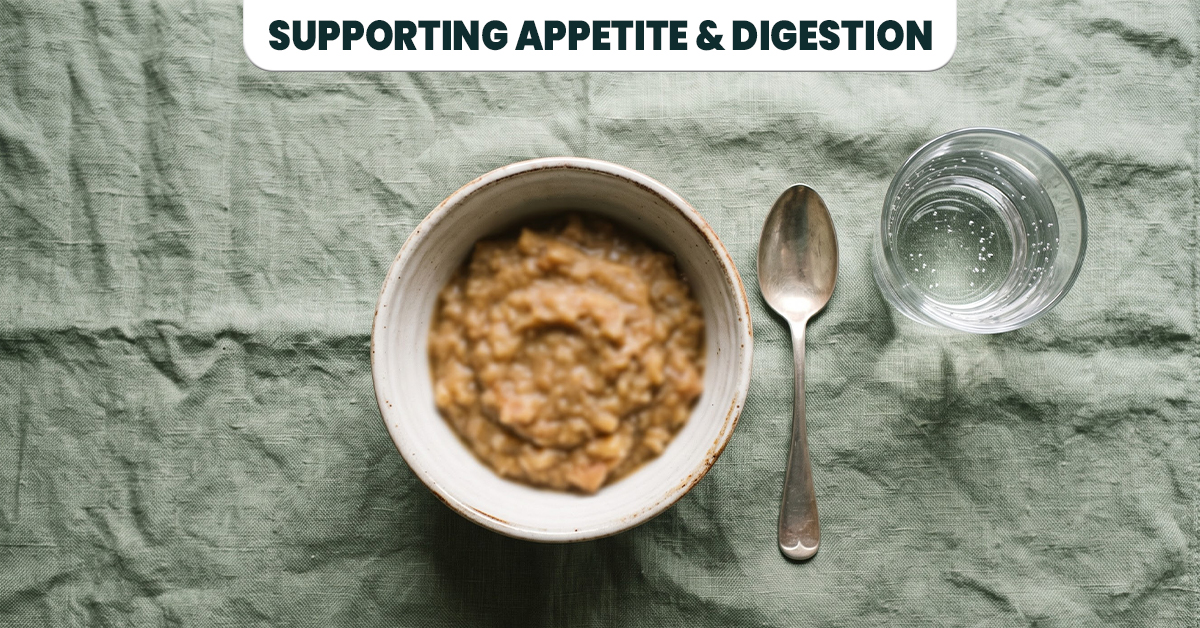
Appetite suppression is one of the most common complaints during chemotherapy, and it frequently feeds a cycle with fatigue — a patient who isn't eating enough becomes more tired, and a patient who is more tired eats even less. Guidance compiled from oncology nutrition literature consistently recommends smaller, more frequent meals, flavouring water to make hydration easier, and keeping the mouth moist to counter treatment-related dryness.
This is also where Ayurvedic dietary principles are traditionally applied — favouring warm, easily digestible food and consistent meal timing to support digestion (agni) during a period when the digestive system is under stress. It's worth discussing any significant dietary change with your oncology team, since some interactions (for example with certain chemotherapy regimens) do need clinical oversight.
Nausea and Digestive Disturbance
Nausea and vomiting remain among the most-reported chemotherapy side effects, affecting a large share of patients depending on the specific regimen. Standard oncology guidance is to take prescribed anti-nausea medication as directed and to contact your care team promptly if vomiting continues despite it — this is one area where self-management has real limits and clinical input is essential.
Immunity and Recovery Between Cycles
Many chemotherapy regimens temporarily lower white blood cell counts, which is why oncologists monitor blood work closely between cycles and why infection precautions matter during this window. Supportive-care approaches — adequate rest, nutrition, and hygiene — are aimed at helping the body recover as fully as possible before the next cycle, always under your care team's monitoring rather than in place of it.
Chemotherapy-Induced Peripheral Neuropathy
Tingling, numbness, or pain in the hands and feet — chemotherapy-induced peripheral neuropathy — is a well-documented side effect of several chemotherapy drug classes, including taxanes and platinum-based agents. A 2021 review in the supportive oncology literature notes that this particular side effect "has no established prevention strategy," though cryotherapy, compression therapy, and, for painful cases, the medication duloxetine are used under clinical guidance. A single case report published in the Journal of Ayurveda and Integrative Medicine (Buch, 2024) described classical Ayurvedic management of taxane-related peripheral neuropathy in one patient — an interesting early observation, but a single case is not evidence of a reliable treatment, and neuropathy symptoms should always be reported to your oncology team rather than self-managed.
Emotional and Psychological Support During Treatment
A cancer diagnosis affects far more than the body. Anxiety, low mood, disrupted sleep, and a sense of losing control over day-to-day life are near-universal experiences for patients and caregivers alike, and they deserve as much attention as the physical side effects.
This is also the area where the evidence for complementary approaches is strongest. The PubMed Central review of complementary and alternative medicine in cancer care found that mind-body interventions — practices like guided meditation, breathing techniques, and yoga — along with acupuncture, currently have the most robust clinical evidence among adjunctive cancer-care approaches, ahead of most herbal interventions. If you're deciding where to start with complementary care, a daily mind-body practice is one of the better-evidenced places to begin, alongside — not instead of — any psychological or psychiatric support your oncology team recommends.
Ayurvedic tradition has long paired physical care with routine and rhythm — consistent sleep and meal timing, gentle daily movement, and structured rest — which lines up with what modern supportive-care research increasingly recognises: that predictability itself has value during an unpredictable illness.
A Note for Caregivers in Mumbai

If you're reading this on behalf of a parent, spouse, or sibling rather than for yourself, you're doing one of the harder jobs in this entire process, and it's worth naming that directly. Mumbai's geography adds its own layer of difficulty — long commutes between home, workplace, and hospital, unpredictable traffic around appointment times, and the logistics of coordinating scans, blood work, and consultations that don't always happen on the same campus.
A few practical habits tend to help: keeping a single shared folder (physical or digital) of every scan, report, and prescription so nothing has to be re-explained at each visit; batching questions for the oncologist between appointments rather than trying to remember them in the moment; and building in your own rest, since caregiver fatigue is real and untreated caregiver burnout tends to reduce the quality of care a patient receives over the course of a long treatment plan. Supportive-care routines — diet, sleep, gentle movement — apply to caregivers too, not only to patients.
What Does the Research Actually Say About Ayurveda in Cancer Care?
It's tempting for any wellness brand to round the evidence up. We'd rather round it down and let you decide with accurate information.
A comprehensive review of complementary and alternative medicine in cancer care, published on PubMed Central (2025), found that the strongest current clinical evidence supports mind-body interventions and acupuncture as adjuncts to cancer care. Herbal approaches — including well-studied Ayurvedic botanicals like curcumin (turmeric) and Boswellia serrata — show encouraging early results as supportive therapies, but the review is explicit that the clinical evidence for herbs specifically remains limited by a small number of high-quality randomised trials, and calls for larger, better-designed studies before firmer conclusions can be drawn.
A separate observational study presented at the American Society of Clinical Oncology's 2024 annual meeting (Kadam et al., Journal of Clinical Oncology, 2024) followed elderly cancer patients receiving Ayurvedic care at a specialty clinic in India and found measurable improvements in quality of life, performance status, anxiety, and depression scores at 90 and 180 days. The study's authors describe this as an early, observational finding that warrants further prospective research — not a completed clinical proof.
A 2026 overview from MD Anderson Cancer Center's integrative oncology programme describes Ayurveda's contribution in similarly measured terms: dietary practices, mind-body techniques like yoga and meditation, and herbal formulations such as Triphala, Ashwagandha, and curcumin "have shown potential" for supportive benefit, while noting that most of the underlying scientific evidence is still at an early stage.
Where Health Reactive's Own Research Fits In — And Its Limits
Health Reactive has invested in the same standard of evidence this guide is describing. Body Revival, our nine-herb Ayurvedic formulation, was studied in a registered clinical trial (CTRI/2023/11/059465) — a 44-patient, 12-week, open-label study conducted at J.B. Roy State Ayurvedic Medical College & Hospital, Kolkata, completed in November 2024.
We want to be precise about what that trial does and doesn't tell you: it studied post-surgical breast cancer patients undergoing chemotherapy and radiotherapy — not lung cancer patients — and its findings have not yet been peer-reviewed. We're sharing it here as evidence of the standard of research we hold ourselves to as a company, not as proof that Body Revival treats lung cancer, or any cancer. If you see a claim elsewhere online that stretches this trial into a general cancer-cure claim, that claim goes further than the actual study supports.
What to Look for in a Genuine, Safe Ayurvedic Supportive-Care Product

The Ayurvedic wellness space in India is large and, unfortunately, not consistently regulated in how it's marketed. If you're considering a supportive-care product for yourself or a family member undergoing lung cancer treatment, a short checklist can help you separate a genuine option from an overreaching one.
- AYUSH registration and ISO/GMP-certified manufacturing — check that both are independently verifiable, not just stated on the packaging
- Language that says "supportive," "complementary," or "adjuvant" care — never "cure" or "treatment" for a specific cancer
- Transparent disclosure of any clinical trial's actual scope — which condition it studied, how many patients, what phase, and whether it's been peer-reviewed
- A named, credentialed author and medical reviewer behind the product's health content, not just marketing copy
- Clear ingredient labelling that stands on its own, rather than relying on a single founder's personal story or testimonial in place of evidence
- Explicit, repeated encouragement to consult your oncologist before adding any supplement to your treatment regimen
- No pressure tactics — a genuine supportive-care conversation should never feel urgent in the way a limited-time sale does
Always Loop In Your Oncologist First
This is worth repeating on its own: herbal formulations can interact with chemotherapy drugs, and what's safe for one patient's regimen may not be safe for another's. The PubMed Central review cited earlier specifically flags herb–drug interactions as an open safety consideration in integrative oncology. Before starting any Ayurvedic supportive-care product — including Body Revival — tell your treating oncologist what you're taking, or planning to take, so they can check it against your specific treatment plan.
Health Reactive has been manufacturing Ayurvedic formulations for close to 30 years from ISO/GMP-certified, AYUSH-registered facilities, and has supported over 1,00,000 patients with complementary care to date. Body Revival is formulated from nine traditional herbs and is positioned strictly as a complementary product to sit alongside — never in place of — your oncologist's treatment plan.
Frequently Asked Questions
No. No Ayurvedic product, including Body Revival, is positioned or should be understood as a cure or treatment for lung cancer. Ayurvedic supportive care is designed to sit alongside conventional oncology treatment—surgery, chemotherapy, radiation, or targeted therapy—not replace it.
It depends on the specific formulation and your specific treatment regimen. Herb-drug interactions are a genuine and documented concern in integrative oncology research, so the safest approach is to share anything you're taking or considering with your treating oncologist before you start, so they can check it against your chemotherapy plan.
Body Revival is manufactured in ISO/GMP-certified, AYUSH-registered facilities by a company operating since 1996, and its formulation has been studied in a registered clinical trial (CTRI/2023/11/059465)—though that trial's findings are specific to post-surgical breast cancer patients and have not yet been peer-reviewed. We disclose that scope clearly rather than generalising it, which is not something every product in this category does.
It shouldn't, if it's introduced correctly—but "correctly" means your oncologist knows about it in advance. Supportive-care routines around diet, rest, and gentle movement are generally designed to fit around your existing treatment calendar rather than disrupt it. Any herbal formulation should specifically be reviewed by your treating doctor first, since interaction risk depends on your exact drug regimen.
Many patients and caregivers start looking into supportive care only once side effects become hard to manage, but there's no clinical reason to wait that long. Diet, sleep, and mind-body routines are things you can put in place from the point of diagnosis, so they're already working for you once chemotherapy or radiation begins—rather than being one more thing to figure out mid-treatment.
Key Takeaways
Lung cancer's burden in India — and in dense urban centres like Mumbai — is real and growing, and most patients are diagnosed at an advanced stage, which makes quality of life during treatment a genuine priority alongside the treatment itself. Ayurvedic supportive care has a legitimate, evidence-informed role to play here, but that role is complementary: managing fatigue, appetite, digestion, and overall vitality alongside your oncologist's plan, not instead of it. The research base is real but still developing, strongest for mind-body approaches and encouraging-but-early for herbal formulations, and any product or article that claims otherwise is overstating what the science currently shows. If you're exploring Ayurvedic supportive care for a lung cancer diagnosis in Mumbai, a free consultation is a low-commitment way to have that conversation with a qualified team before you decide anything.
CALL TO ACTION
Considering Ayurvedic supportive care alongside your lung cancer treatment? Book a Free Consultation: https://healthreactive.co/bodyrevival
AUTHOR BIO
Dr. Hemant Kadam, BAMS — Author. Dr. Kadam leads clinical content for Health Reactive, an ISO/GMP-certified, AYUSH-registered Ayurvedic manufacturer operating since 1996. [Open item: confirm exact years of experience / additional credential line before publish.]
Medically reviewed by Dr. Farah Zariwala, BHMS.